
The case of D.R. v City of New York, decided by the Appellate Division, First Department, addresses the scope of liability under the Child Victims Act and the legal boundaries between overlapping tort claims. The plaintiff, D.R., brought suit under CPLR 214-g, which revives time-barred claims for survivors of childhood sexual abuse. She alleged that between 1957 and 1958, while in the custody of St. Michael’s Home—a group foster care facility operated by various Catholic organizations—she was sexually abused by an individual affiliated with the institution in a professional or volunteer capacity.
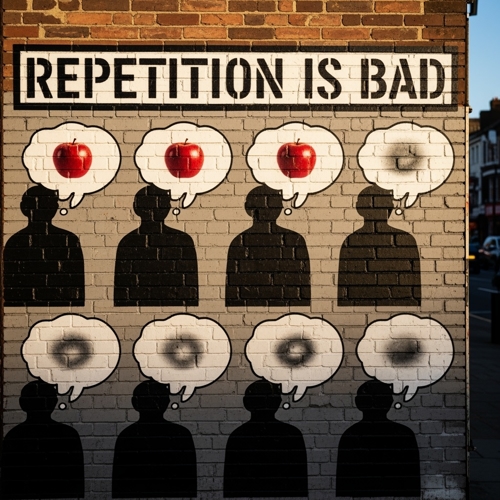
The plaintiff asserted multiple causes of action, including one for negligent hiring, retention, supervision, and/or direction (NHRSD), and another for premises liability. The defendants, collectively referred to as St. Michael’s Home, moved to dismiss the premises liability claim, arguing that it was duplicative of the NHRSD claim. The Supreme Court denied the motion, allowing both claims to proceed. On appeal, the Appellate Division reversed that decision and dismissed the premises liability cause of action.
The appellate court held that the premises liability claim was legally redundant. It emphasized that while negligence claims based on premises liability and NHRSD may appear distinct in theory, in this case they were grounded in the same factual allegations, required the same legal elements, and sought the same relief. The court relied on precedent, particularly Nouel v 325 Wadsworth Realty LLC, to reinforce the principle that duplicative claims should not proceed when they do not offer a separate theory of liability or remedy. The court also distinguished this from cases where a premises liability claim might rest on a distinct duty of care, such as one owed specifically to a child, which was not the case here.
This decision underscores the judiciary’s effort to streamline litigation by eliminating overlapping claims that do not serve a distinct legal function. While the court did not disturb the plaintiff’s right to pursue her claims under the Child Victims Act, it clarified that plaintiffs cannot multiply theories of liability when the underlying conduct and legal standards are materially the same. The ruling also reflects a careful balancing act: honoring the remedial intent of the Child Victims Act while maintaining procedural discipline in tort pleadings.
Clearly, the law demands precision, over duplication ....
# # #
DECISION