
 Cleaning Up a Broken CFL
What to Do if a Compact Fluorescent Light (CFL) Bulb or Fluorescent Tube Light Bulb Breaks in Your Home: Overview
Cleaning Up a Broken CFLWhat to Do if a Compact Fluorescent Light (CFL) Bulb or Fluorescent Tube Light Bulb Breaks in Your Home: Overview
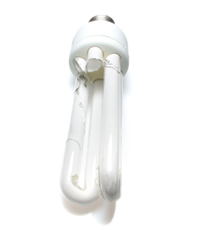 Fluorescent light bulbs contain a small amount of mercury sealed within the glass tubing. When a fluorescent bulb breaks in your home, some of this mercury is released as mercury vapor. The broken bulb can continue to release mercury vapor until it is cleaned up and removed from the residence. To minimize exposure to mercury vapor, EPA recommends that residents follow the cleanup and disposal steps described below.
This page presents only the most important steps to reduce exposure to mercury vapor from a broken bulb.
- View the detailed recommendations
- Download and print:
- Before cleanup
- Have people and pets leave the room.
- Air out the room for 5-10 minutes by opening a window or door to the outdoor environment.
- Shut off the central forced air heating/air-conditioning (H&AC) system, if you have one.
- Collect materials needed to clean up broken bulb.
- During cleanup
- Be thorough in collecting broken glass and visible powder.
- Place cleanup materials in a sealable container.
- After cleanup
- Promptly place all bulb debris and cleanup materials outdoors in a trash container or protected area until materials can be disposed of properly. Avoid leaving any bulb fragments or cleanup materials indoors.
- For several hours, continue to air out the room where the bulb was broken and leave the H&AC system shut off.
These tips also apply to other mercury-containing bulbs, including:
- Other fluorescent bulbs, including linear, U-tube and circline fluorescent tubes, bug zappers, tanning bulbs, black lights, germicidal bulbs, high output bulbs, and cold-cathode fluorescent bulbs;
- High intensity discharge bulbs, which include metal halide, ceramic metal halide, high pressure sodium, and mercury vapor;
- Mercury short-arc bulbs; and
- Neon bulbs.
Related Information
- Why is it important to take these steps? Learn more about CFLs and mercury.
- Find out how to recycle and dispose of a CFL after it burns out
Reports Relating to the Accidental Breakage of CFLs:
- May 2010 opinion of the Scientific Committee on Health and Environmental Risks (SCHER) of the European Commission Health and Consumer Protection Directorate on Mercury in Certain Energy-Saving Light Bulbs (16 pp, 140 K, about PDF )

- February 2008 Maine Department of Environmental Protection Compact Fluorescent Lamp Breakage Study Report
- February 2008 Mercury Policy Project report: Shedding Light on Mercury Risks from CFL Breakage (23 pp, 2.3 MB, about PDF )